It’s been a great first year for Project Plasma, expanding our team, attending networking & showcase events, developing systems attached to our fusor and of course, performing our first ever deuterium tests. These tests proved that we can handle deuterium gas safely within our chamber, but much more work is required to reach the point of successful fusion.
Short summary of Semester 1 work
During Semester 1 we began work settling in our new members, familiarising everyone with the systems currently in place and the areas that each person would be working on. Progress was made on the high voltage systems, as well as with gas and pressure handling. There is much more detail outlined on our news page of the website in our ‘Update on our First Semester as Project Plasma’ blog post.
Our work this semester
During this last semester, we have focused our work in three main areas, the gas delivery system, grid designs and simulation work. The gas delivery system involved careful planning between ourselves and our academic supervisor, as we were dealing with a highly flamable & explosive gas, to design a system that complied with health and safety regulations. The initial plan was to use flashbacks to prevent a spark travelling from our chamber, along the gas delivery line, and to our bottle of compressed deuterium, however in the end it was decided to reduce the risk further by designing a system that does not require the deuterium bottle be connected to the system during operation. This new system involves filling the inside of a small vessel (in our case a length of narrow piping) with deuterium, using a mass-flow controller, sealing the end connected to the deuterium source, disconnecting the deuterium source and then leaking deuterium into the chamber at a rate decided by our needle-valve. This system was proven successful during our deuterium tests at the end of the year.
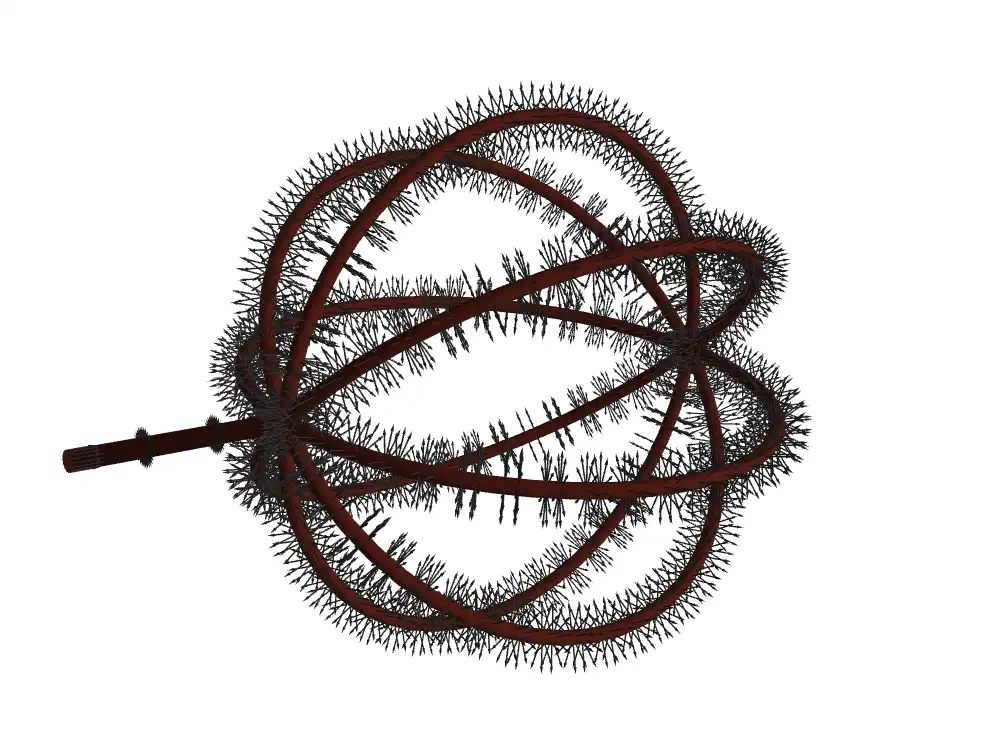
The next major area of work was the grid designs. This work involved designing and constructing some grids, without using solder, that could be used to contain our plasma. These grids had to be designed without solder, as at the voltages that we were planning on testing at, the solder would melt, leading to the deformation of your grid. A range of designs were produced, using 2 or 3 concentric rings, to test which design was more efficient, with the 3 concentric ring design proving the best at containing our plasmas. Another grid was designed, using a coiled structure, to try to funnel the plasma and form a jet at the open end of the grid, with this work being led by Joe Peers. Closely related to this work, we had an extremely skilled programmer in our team working on designing simulation software for our team to use. Marcus James has been working on writing custom electric field simulations, with later plans to add magnetic field, and plasma simulations into this package. This would allow us to model our plasmas before physical testing, and compare our experimental results of that of the simulated results.
The final major area of work that has been completed this semester has been led by Joe Whitehurst. This device is intended to be a demonstrative IEC fusor, intended to sustain a plasma without ever reaching conditions suitable for fusion. It is intended to be taken to showcase and networking events, to reflect the work the team is doing and to represent the underlying physics of our project. There is a much more detailed blog post, written by Joseph Whitehurst, outlining the construction process of the mini fusor, which can be found here.
Networking & Showcase event
The team has also had the opportunity to attend networking events both within our own university, but also at another university in the UK. The first of these events was the ‘Here Comes the Sun’ fusion event hosted by the university’s Nuclear & Fusion society. During this event our team had the opportunity to network with both students and academics within the industry, and an opportunity to give a presentation outlining the work our team does. This was a great opportunity to inform others of the work we do, and encourage university students of all years to get involved in the fusion industry. At the end George Viant and Joseph Whitehurst were invited to join in with the panel session, where discussions were had about working in the industry, fusion from an academics perspective and ways for students to get involved in fusion. There is more information outlining this event on our website, this can be found here.
Another event our team got the privilege of attending was the second year of MancheSTAR’s Formula Fusion event. This was a great opportunity for us to chat with students interested in fusion from across the UK, further strengthening our relationships within the wider UK university community. We brought along the mini fusor, mentioned above in this post, as well as a work-in-progress design, aiming at making the device cheaper, smaller and easier to use. These devices prompted interest from many of the students walking by, leading to technical discussions about our work on both these systems and our main fusor system. There is more information about this event on our website which can be found here.
Future plans
Looking forward to the next few years, the team plans on continuing the development of the main fusor system, as well as the creation of new projects - similar to the mini fusor. We plan to expand our team, allowing more students to get involved in this work, but also so we can improve the rate at which we deliver on our ideas. The hope over the next couple years is that we achieve successful fusion, and consistent neutron generation, as this would open up a whole new realm of experimental opportunities for our team to work on.
Finally, it has been a pleasure to lead the team this year, learning not only about the technical aspects of the project but also getting to know everyone within our team. I look forward to next year; the progress the team will make, the opportunities we will have, but also the opportunities we will open for others. I wish everyone the very best for summer and look forward to being back for another year of Project Plasma!